
Chinese Herbal Medicine: Internal Support for Everyday Health
Many people who are interested in natural medicine start with supplements, teas, or individual herbs. They’re often looking for something gentler—something that works with the body. Over time, many realize that while these approaches can help, they don’t always create lasting change

Chinese herbal medicine takes a different approach.
Rather than focusing on one herb for one symptom, it uses carefully designed formulas that support how the body functions as a whole. These formulas are prescribed much like internal medicine: chosen through assessment, adjusted over time, and matched to how the body is responding.
Because of this, Chinese herbal medicine is often used for everyday internal concerns that affect quality of life—stress, mood changes, fatigue, hormonal shifts, sleep issues, joint discomfort, constipation, and patterns that don’t seem to fully resolve no matter what someone tries.
What Makes Chinese Herbal Medicine Different
One of the defining features of Chinese herbal medicine is its use of formulas rather than single herbs.
A formula is a combination of herbs designed to work together. Some guide the overall effect, others support movement or calming, and some help the body tolerate the formula over time. The goal is to support balance so the body can regulate itself more smoothly.
This approach reflects how the body actually works. Symptoms rarely exist in isolation. Stress affects sleep. Sleep affects energy. Energy influences mood, hormones, digestion, and pain. Addressing one area without considering the others often leads to short-term improvement followed by recurrence.
Formulas are designed with this interconnectedness in mind.
How Herbal Formulas Work in the Body
With herbal formulas, changes tend to unfold over time as the body adjusts, instead of producing the immediate effects people often associate with painkillers or hormone suppressants.
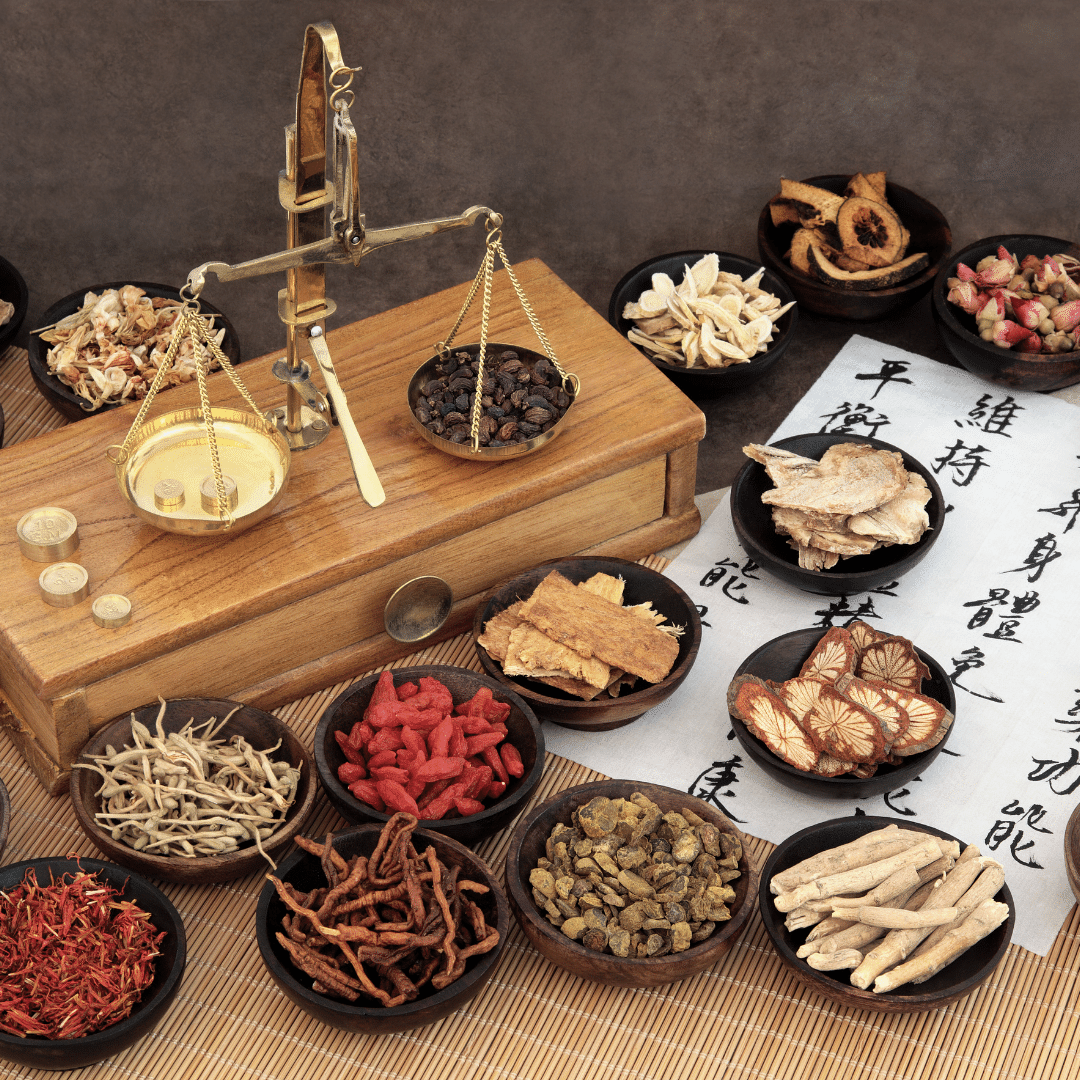
Formulas support the body’s own regulatory processes. People often notice steadier energy, improved sleep, or better stress tolerance before a specific symptom fully resolves. This reflects the body reorganizing itself over time.
Modern research supports this understanding, showing that commonly used Chinese herbal formulas influence inflammation, nervous system regulation, circulation, hormone signaling, and stress response—helping the body move toward balance.
Real-Life Examples of How This Shows Up
Menstrual and Gynecological Concerns
Menstrual concerns are a common example of how this approach works in practice.
Painful periods, heavy bleeding, irregular cycles, fibroids, or chronic pelvic discomfort rarely exist on their own. They often appear alongside stress, fatigue, sleep disruption, or mood changes.
Chinese herbal medicine approaches these concerns by supporting circulation, calming stress responses, and helping the body regulate hormones more smoothly.
Research on traditional formulas used for gynecological concerns suggests effects on uterine blood flow, inflammation, and hormone signaling, which align with improvements seen in clinical use (Zhang et al., 2016; Liu et al., 2019).
The focus is on supporting the internal environment so the body can respond more efficiently over time.
Constipation and Digestive Stagnation
That same systems-based approach applies to other everyday concerns, such as constipation.

For many people, constipation shows up alongside stress, poor sleep, low energy, bloating, hormonal shifts, or a feeling of being tense or stuck in the body. Short-term relief may occur with laxatives, while the underlying pattern often continues.
Chinese herbal medicine addresses constipation by supporting movement, circulation, fluid balance, and nervous system regulation—factors that all influence bowel function.
When these systems are supported, bowel movements often become more regular. Research reflects this broader approach, showing benefits related to gut motility, inflammation, and gut–brain regulation (Liu et al., 2018; Zhang et al., 2020).
As bowel patterns improve, other areas often shift as well. Sleep may feel deeper, bloating may lessen, and overall energy may improve. These changes reflect the same internal systems becoming more balanced.
How Herbal Consultations Are Structured
Chinese herbal formulas are personalized and adjusted over time, which means they require sufficient context to be used well.

As part of a herbal consultation, assessment includes tools specific to Chinese medicine, such as observing the tongue and feeling the pulse. These offer additional information about how the body is functioning internally and help guide formula selection and adjustment over time.
For many people, this is their first exposure to these diagnostic methods. They are used alongside symptoms, history, and lived experience to support a more personalized approach.
Herbal care works best when the formula is matched to the person and adjusted as the body changes. This is why Chinese herbal medicine is practiced through consultation rather than fixed protocols.
An application-based consultation process helps ensure the approach is appropriate, expectations are aligned, and the medicine can be used safely and effectively.
A Final Thought
Chinese herbal medicine focuses on supporting how the body responds to stress, change, and demand.
When used thoughtfully, herbal formulas offer steady, personalized support that helps people feel more regulated, resilient, and supported in everyday life.
References
Liu, Y., Zhang, J., Wang, Q., & Li, X. (2019). Traditional Chinese herbal medicine for uterine fibroids: A systematic review and meta-analysis.Journal of Ethnopharmacology, 241, 111970.
Liu, Z., Yan, S., Wu, J., & Wang, Y. (2018). Chinese herbal medicine for functional constipation: A systematic review and meta-analysis.Evidence-Based Complementary and Alternative Medicine, 2018, 1–12.
Zhang, T., Zhang, J., & Li, Y. (2020). Effectiveness of traditional Chinese medicine in the treatment of chronic functional constipation: A meta-analysis.Journal of Gastroenterology and Hepatology Research, 9(1), 3065–3072.
Zhang, Y., Liu, P., & Li, S. (2016). Chinese herbal medicine for the treatment of uterine fibroids: A systematic review and meta-analysis of randomized controlled trials.BMC Complementary and Alternative Medicine, 16, 1–10.
